
TMJ Consultation
Relief from TMJ pain and dysfunction is within reach. Our evaluation is your initial step towards a pain-free jaw and improved quality of life. Complete the form below, and let our experts guide you on a personalized journey to effective TMJ treatment.
The process starts like this.
Once you get in touch with us, we put you in contact with our knowledgeable New Patient Coordinator who can answer many of your questions and help you understand our diagnosis and treatment process.
She will answer any of your initial questions about our process, and help me qualify you initially for our comprehensive examination assessment. Once an appointment is made with our doctor, we provide you with an intake questionnaire that is designed to help us understand the level of complexity of your TMJ condition. This form is provided through our secure HIPAA compliant portal. This first information gathering encounter with you helps us start to assess you early on.
On the day of your assessment, several scout tests will be performed to help us determine if you have complex TMJ dysfunction involving other adjacent systems like the upper cervical spine, airway, neck and shoulders. We use non-invasive technology to measure the relationship of the cranio-mandibular system on the atlas-axis vertebras. We also evaluate posture, functional leg-length, and spatial orientation of the complex jaw, head, neck and shoulder coupling system. To do this, we acquire special 3-D upright images which allow us to objectively measure specific TMJ craniocervical relationships and identify and measure airway impingement signs. The status of the jaw joints is determined objectively, at this time.
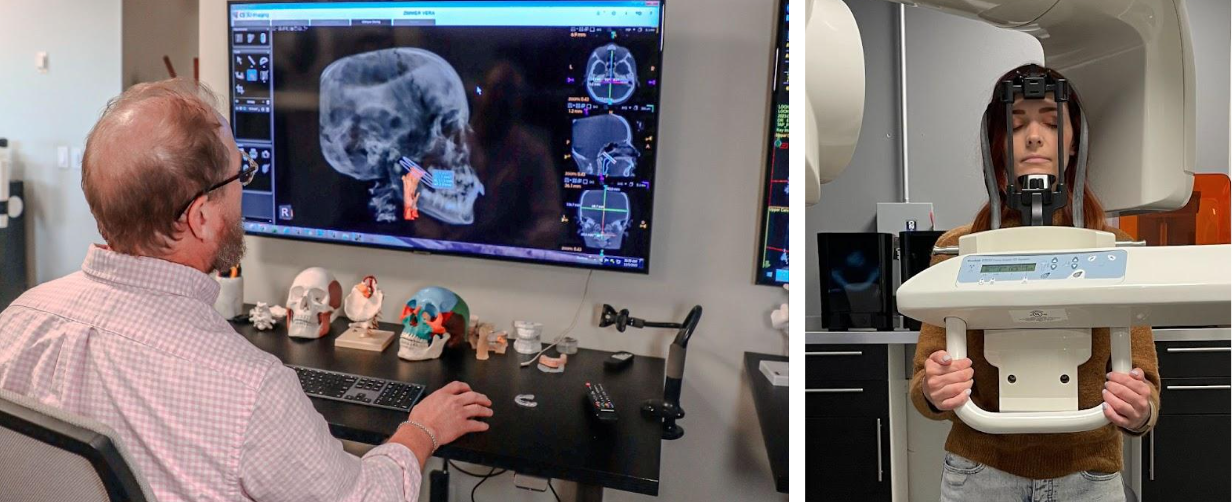
If you are found to be a candidate for the procedure, and you chose to proceed with treatment, you will be scheduled for a special take-home sleep study that detects oxygen drops (desaturations) and correlates these drops in time with clenching and/or grinding.
(Note: There is no catch! We simply don’t want to “catch you” if we don’t think we can help you. I have learned that the more I can do up front to identify any correctable problems on imaging, the better our clinical outcomes.)
I have over 25 years managing and treating complex head, neck and jaw disorders, and I have learned a thing or two about those who respond well to treatment and those who don’t. Simply put, I very much enjoy helping people with complex TMJ problems, and l am willing to put some skin in the game to help you find a genuine pathway back to normal, healthy function. I spend the time with you upfront to help you understand how and why the TMJ’s are aggravated and symptomatic. If I genuinely feel that I can help you, we will submit to you a comprehensive treatment plan so that you can begin your healing journey.
Jaw joints can heal, but you have to address the underlying problem before that can begin to happen. An undetected sleep breathing condition frequently lies at the root of TMJ dysfunction. How this works in a nutshell: When the airway is compromised, the body will deploy a night-time clenching, and/or grinding mechanism to open the airway. This puts chronic wear and tear on the TMJ’s, irritating and over-working the muscles, causing face and jaw pain and morning headaches. The jaw joints take an immense beating trying to keep the blood oxygen values to bare minimums to keep you breathing while you sleep.
Below is an example of a common change that occurs after we identify and correct an airway problem which is commonly found to be at the root of complex TMJ dysfunction. Once we get to the root of the airway problem, the TMJ’s may began the healing journey.
Better airway means better breathing. Better breathing means way less chronic stress on the TMJ’s and better sleep. Since quality of sleep is tied directly to longevity and neuro-protectivity, better sleep means better life… and, a significant decreases in jaw pain.
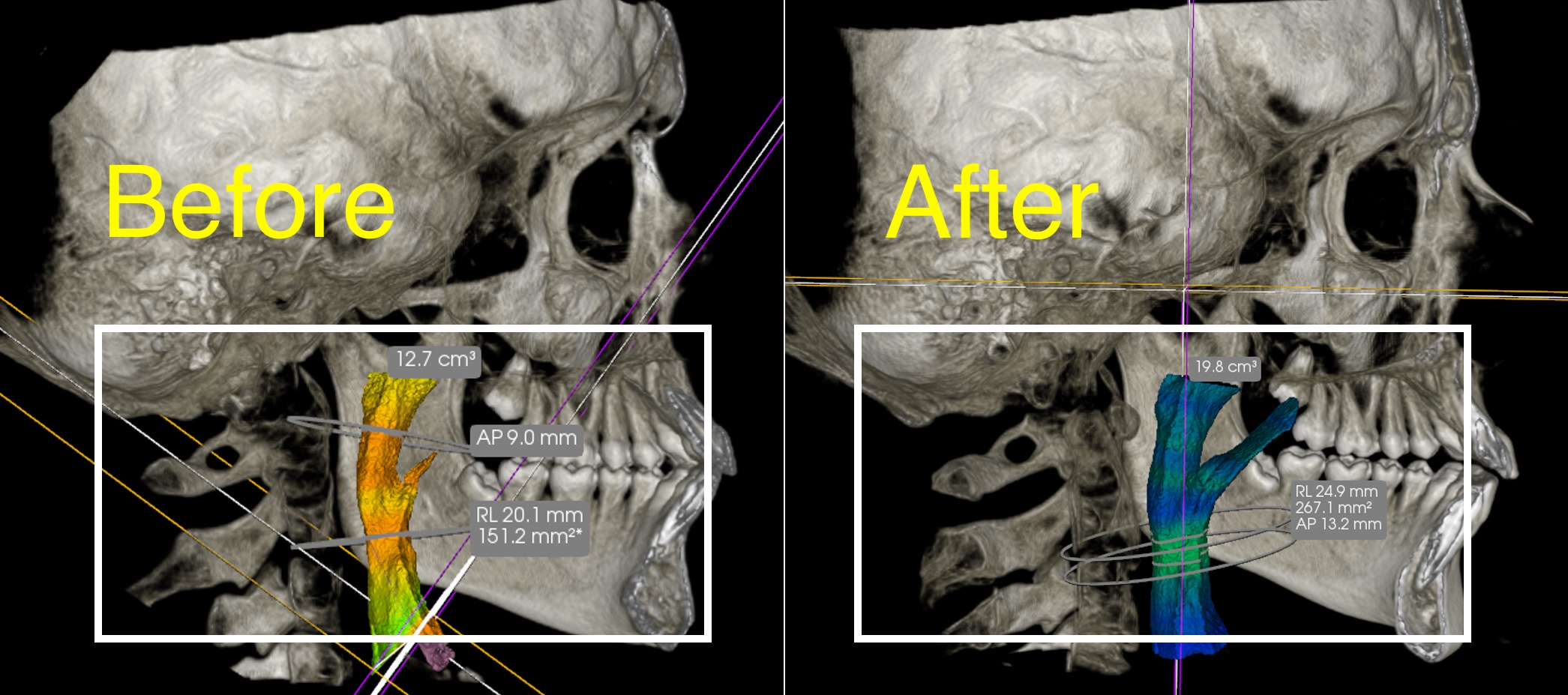
While not performed on the initial assessment visit, having the TAP procedure performed is followed by immediate airway changes In the alignment of the head and neck junction, as well as opening of the most critical part of the airway–the constricted part! Our after-TAP 3-D images are compared to our before-TAP images to make sure we get the changes we want to see on the first TAP.